Applying For Jobs in the Creative Media Sectors
This will cover the variety of ways you can apply for jobs in the creative media sectors.Job application
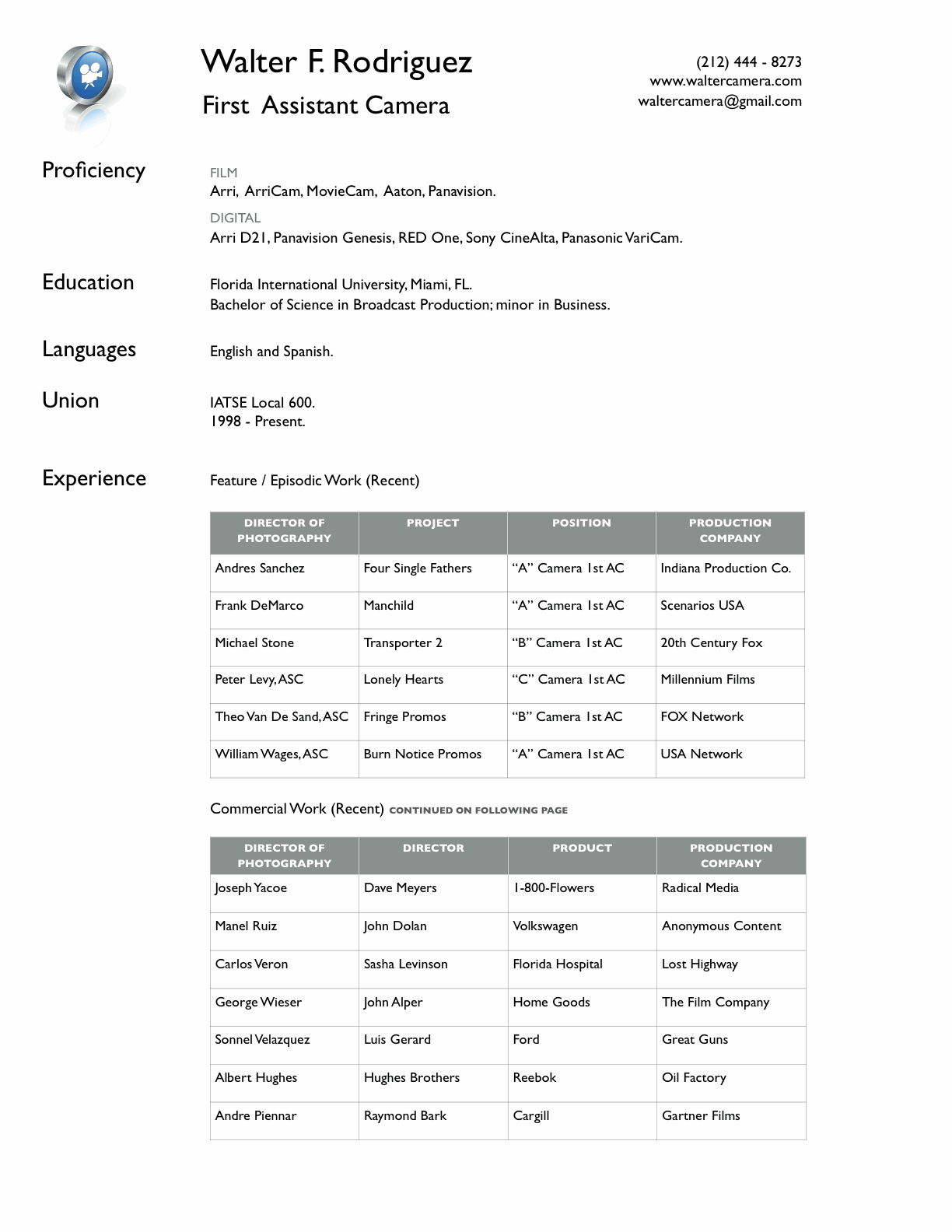
To get most jobs you must apply by sending in an application form. This is a form or collection of forms that you must fill out in order to let the employer know why they should hire you. It would typically involve a list of questions or boxes which you would fill in about your skills, experience and qualifications that relate to the job you are applying for.This is an example of an application form is for someone who is applying to be a Camera Assistant.
 |
| (Source: http://www.cameraassistant.com/images/Walter%20F.%20Rodriguez%20-%201st%20Assistant%20Camera%20-%20Resume.gif) |
It is set out quite simply in the way that this person has filled out all of the information which is listed to fill out. He has included his name and contact details so the employer can contact him if they want to bring him in for an interview or even potentially talk to him about employing him. He then has included what his skills involve (Proficiency), this is telling the employer that he is able to do the job with the skills. He then went on to include his qualifications and experience which are very important to include because this shows the employer what he has been capable of so far, the better the qualification, the more you appeal to employers.
CV & covering letter
This is similar to a job application in that you are writing about your experience, skills and qualifications to make you appeal to employers but it is not set to a particular Job. Your CV should include all of these things and a bit more information about yourself such as your contact details, where you're from, some of your interests and hobbies and a personal statement which should describe the factors about you that would be appealing to employers.Portfolio
These are more typically expected when applying for creative jobs as an example of work you have already done prior to applying. Having a portfolio of your work shows employers you are someone who continues to develop and enhance their skills and understanding of the work they do. A professional portfolio provides a space in which you can plan and reflect in depth on your practice, helping you identify your strengths and find ways of building on these.There are various ways in which a portfolio can be developed depending on the type of work you do. A portfolio for someone who works in film would typically be in the style of a show-reel. This would be a collection of films which they have worked on/made, usually clips of their work edited together as one collective film to which they would then show to potential employers and then talk about their work further, explaining what they are most proud of and what they would improve and what they would like to work on further.
Professional website
Many Employers are more impressed by a personal website than any other personal branding tool although only 7% of job seekers have their own personal website. There is also an increasing chance that employers will research job applicants online, therefor owning your own website with your name in the domain gives you a better chance at showing up when someone searches for you.Having a personal website is like having a more advance CV. It gives you the chance to express everything that you can do and who you are and how you present it will also say something to employers as well as the information you include. For someone wanting to work in the creative sectors it is a great opportunity to present all their creative work in one place such as films or art work.
Networking online
As previously said, many employers when looking to hire an individual will search them online and many times this means it will result in them finding your social media accounts and any public information you have online. To job seekers social media allows you to learn about companies that are more relevant to you and hear about job opportunities more quickly.Many companies have their own social media accounts and pages which people can follow and find out more about that company and sometimes find out if that company has any job openings. The Walt Disney company, for example has their own Twitter account for people looking to work for their company called DisneyStudiosCareers (@TWDS_Careers), this offers links to their official job seeking website with tweets about different types of jobs in the company that people may be interested in.
Recommendation from clients
When you have had experience in working for clients you can ask them to give you feedback on your work. This can include a series of questions you want to ask them or it could just be an open letter that they write about their thoughts on your work. When building a portfolio or personal website with the work you have done you can then also include the clients feedback along with it, this lets employers know how successful you have been with your work so far.Work experience/voluntary work placement
This is something you would write about in your CV's and Job applications. Having experience makes you much more appealing to employers because it shows more reliable evidence that you have the skills to work in whatever your experience is in. Voluntary work shows that you are a committed worker who doesn't just work for money but also works for the benefit of others or of gaining new skills. This shows that you go the extra mile and makes you more appealing to employers. Having work experience in a similar field of work to the job you are applying to will provide evidence that you can in fact do that job, especially if you then also have good recommendations from former employers.Professional Behavior
When working in the creative sector there are various things you must be aware of which employers take notice of from their employees.Reliability
The longer you work for an employer, the more they learn about you and how you work. If you always stick to deadlines and do tasks when asked to a good standard, the employer will trust you more, therefor showing the employer that you are reliable. The more things you do right, the more they will trust you. However, if you don't stick to deadlines and slack off most of the time, you will not seem reliable to the employer and opportunities such as promotions will most probably be given to someone else.Attendance and punctuality
Having good attendance means you don't take too many days off for being sick or holidays. Having good punctuality means you are not late to work often. It is important that if you do need to be off work or show up late that you have a good reason such as doctors appointments or general illness. However, it is better that you show up on time to work every day you are expected too because the more hours you are abscent, the less work is done. If too many hours are left unattended, employees will become impatient with you and most probably find someone else to take your place.
Commitment
Employers will expect you to be committed to your work, this means doing whatever it takes to get things done to a good standard, putting a lot of effort into your work. A lack of commitment to your work could result in you losing your job. In the creative sectors, they may need to you work long hours, sometimes working through the night, this will mean you must be patient with your work and keep going until the work is done.
Efficiency
Efficiency means working to a good standard in good time and your work having a benefit on the job overall. If you have a good level of commitment and time management your work will be much more efficient. Those who don't work efficiently can end up with less opportunities than others. In the creative industry it is important to be efficient because most of the time you will be working to deadlines and those deadlines have to be kept and the work has to be done to the best standard possible.
Self-presentation
How you present yourself and your work can have a big impact on how employers see you. They will often know how organised a person is from how smartly they present themselves. In the creative industry if you are working in a line of work which means you must be seen on video through television or film to the public, you must present yourself in the correct manor depending on what type of work you are doing. If you are a news presenter you must be quite formal, dressing smartly so people take you seriously. If you a presenter on a kids TV show however you may be more laid back in your clothing so you look friendly and non-threatening to your audience.
Communication skill
This means communication in many forms, with employees, other companies and also communication to the public if you are working in broadcasting, film, social media and other jobs in the creative sectors. You must be able to present your work clearly to other people and make them engaged in what you have created.
Contribution to team projects
The people you work with will take notice of the people who contribute the most to team projects and offer more opportunities to those who do.
Time management
This is vitally important if you don't want your work to pile up on you. It means you must schedule your work if you know you have a lot to do and balance it out so you are doing as much as you can cope with over a period of time. If you know you have a tight deadline for something, start it as soon as you can so it doesn't catch up on you. The creative sectors can involve many deadlines for work you have to complete for clients, this means you can't slack off for a week or so, you must respect the clients deadline they have set for you and if they don't set one, set a reasonable one yourself, therefor the clients will come to you again if they know you complete the work in a reasonable time to a good standard.
Personal responsibility
Employers take notice of which of the staff takes the most responsibility and handles it professionally.

No comments:
Post a Comment